Research Paper · Submitted, Not Yet Accepted
Machine Learning-Based Mental Health Assessment and Depression Screening Using the U.S. DASS-42 Dataset
Co-Author · Submitted for peer review
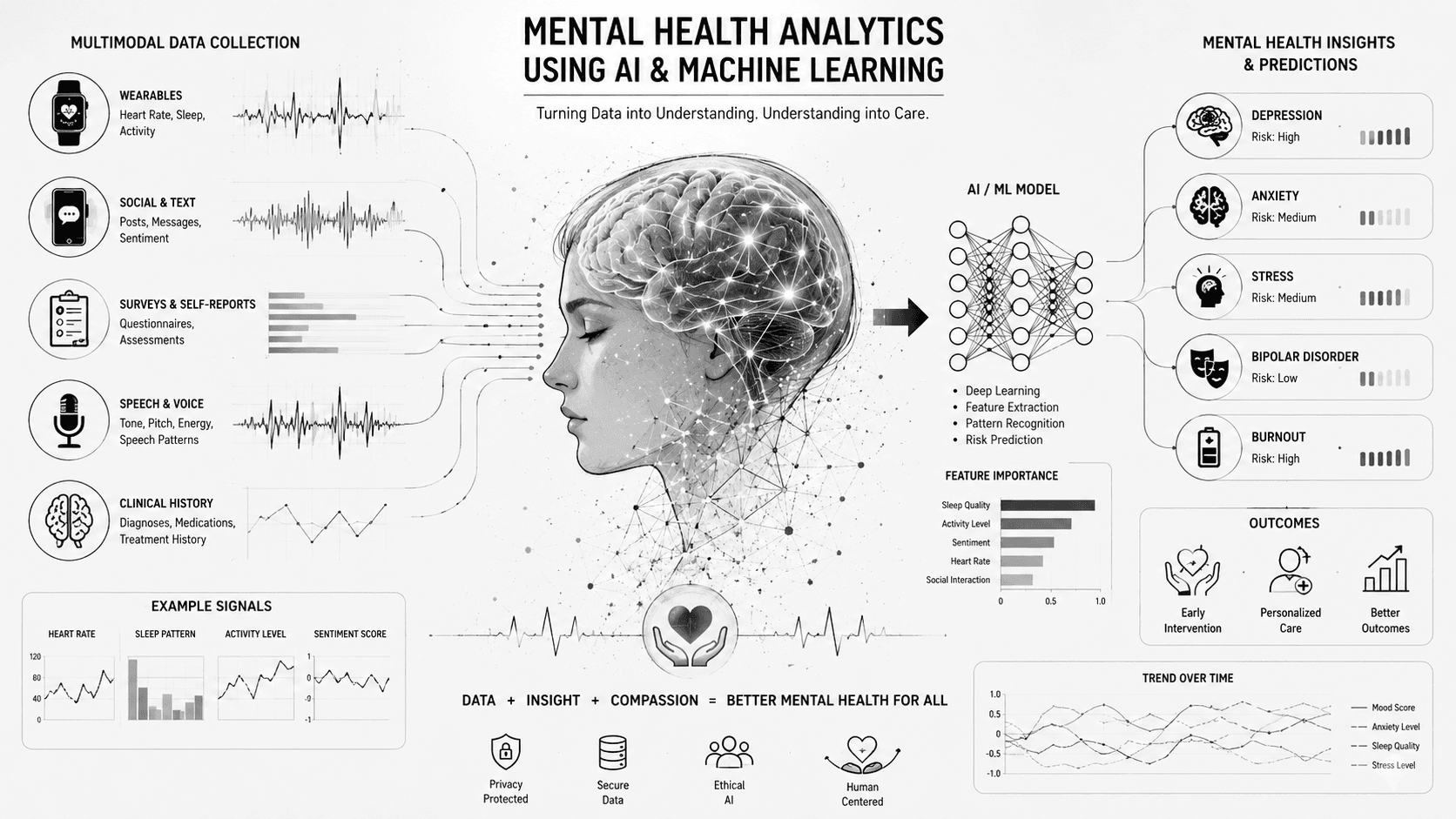
Identifying depression early can help ensure timely intervention and improved mental health outcomes. This paper presents a machine learning approach to binary depression classification using a U.S.-specific subset of the publicly available DASS-42 dataset.
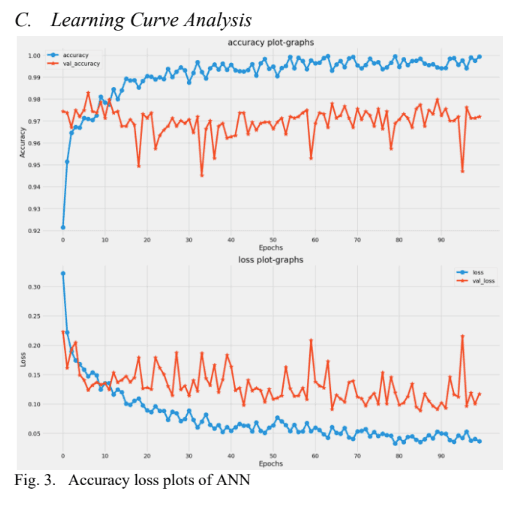
Three models were trained and compared under the same pre-processing conditions: Random Forest, XGBoost, and an Artificial Neural Network (ANN).
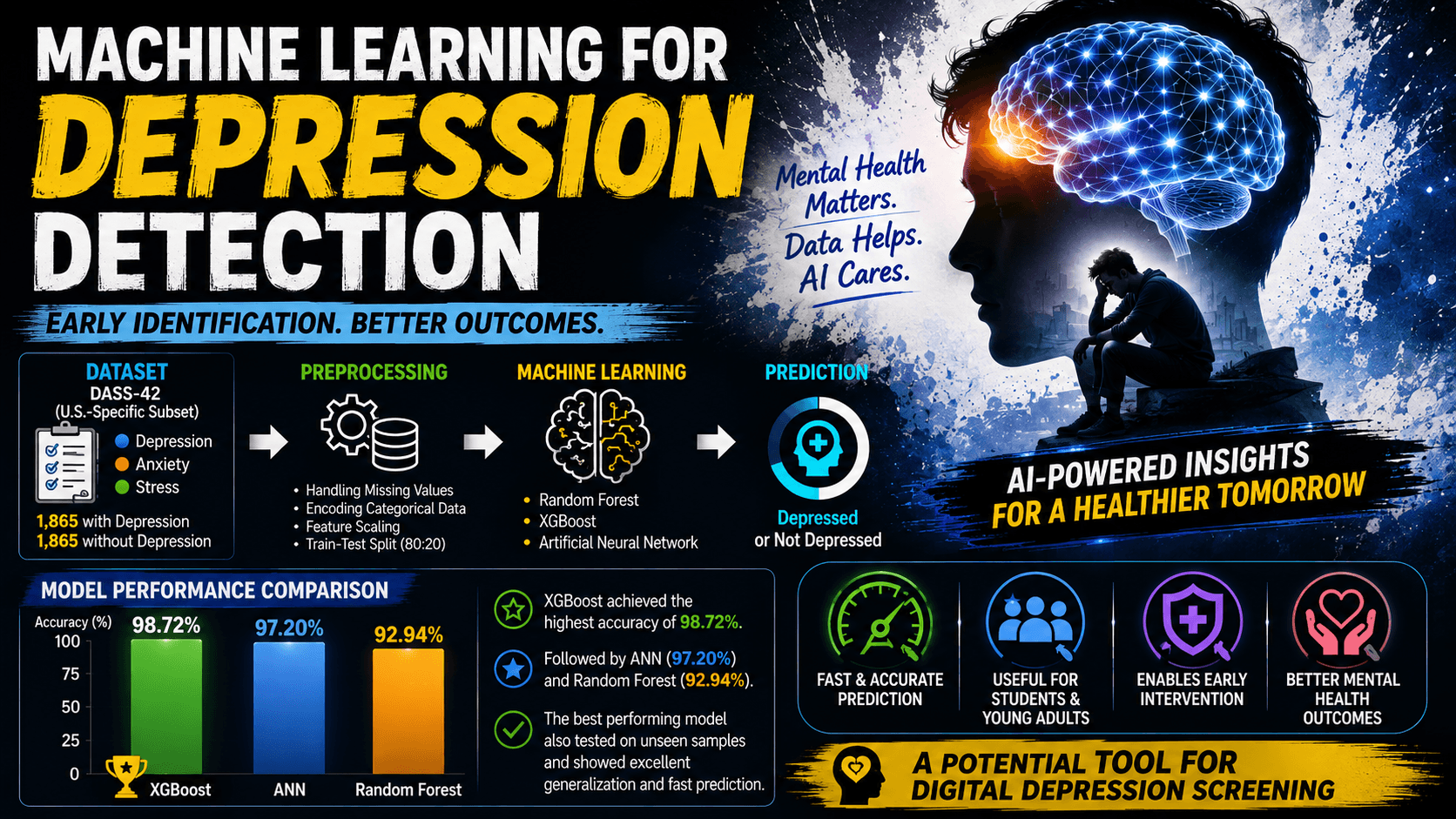
XGBOOST
98.72%
Accuracy
ANN
97.20%
Accuracy
RANDOM FOREST
92.94%
Accuracy
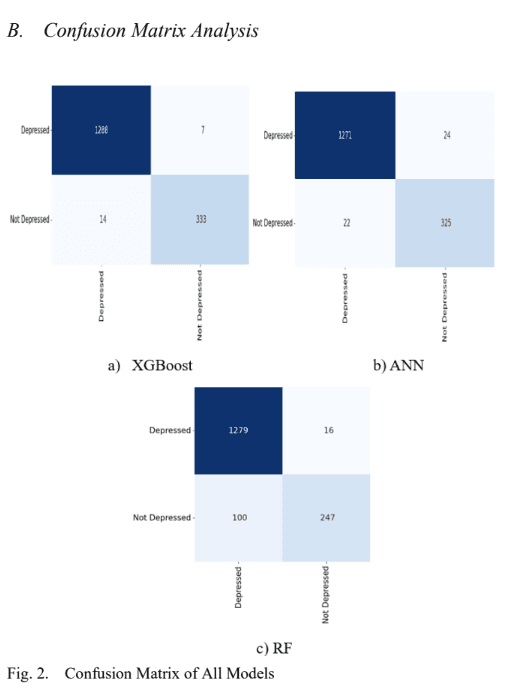
XGBoost was the top performer and was further tested on unseen samples, where it proved suitable for fast prediction — making it a potential tool for digital depression screening for students and young adults.
This paper has been submitted for peer review and has not yet been accepted or published. This page will be updated with the venue and publication link once a decision is reached.