
IEEE Research Paper · Co-Author
Federated Deep Learning for Privacy-Preserving Intrusion Detection in Distributed Network Environments
2026 6th International Conference on Intelligent Technologies (CONIT) · June 19–21, 2026
Traditional network intrusion detection systems work by pooling raw traffic data from every client into one central location to train a single model. That’s a real privacy problem — organizations often can’t or won’t share their raw network data with anyone else, which makes centralized systems impractical for distributed environments where multiple independent networks need protection.
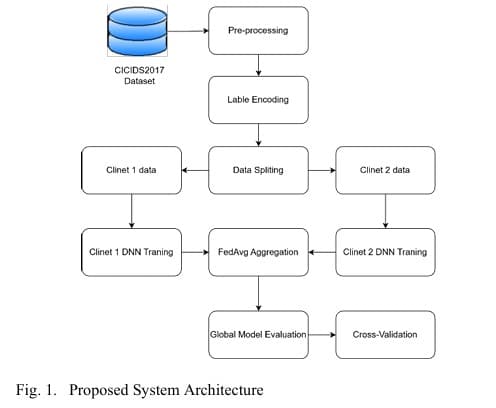
This paper proposes a federated learning architecture instead. A deep neural network is trained separately on each distributed client’s own data — the raw data never leaves that client. Only the trained model’s parameters are sent out, and they’re combined across all clients using the Federated Averaging (FedAvg) algorithm to build one global intrusion-detection model, without any client ever exposing its actual network traffic.
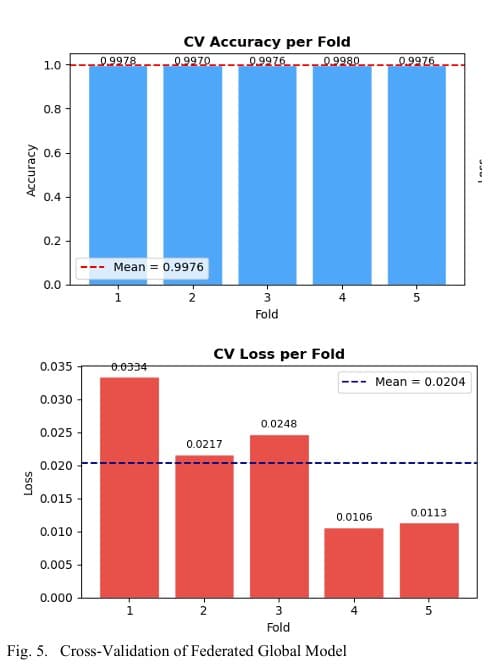
The results held up: 99.68% accuracy and 99.76% ± 0.03% cross-validation accuracy, meaning performance stayed consistent even as the data was split differently across clients. The model also produced near-perfect F1 scores broken down by individual attack type.
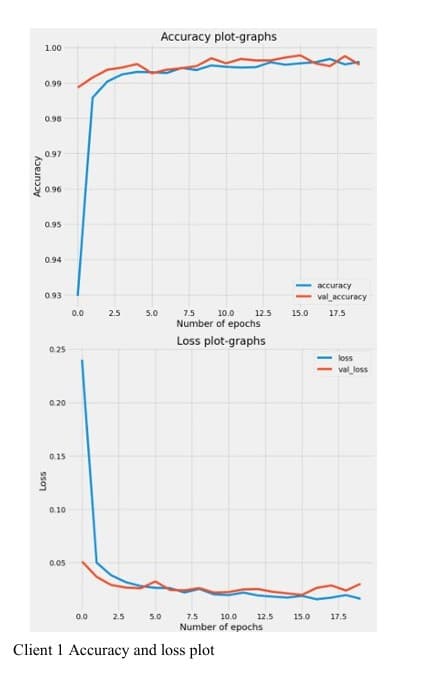
The core finding: this approach matches the performance of centralized training while actually preserving data privacy — directly applicable to real-world cybersecurity services.